
Sidia is a education Platform website.






Course Description
This subject discusses the origin of language and introduces the basic concept of linguistic branches and their functions. The lecture begins with an explanation of the study of sound that covers sound production and three labels of phonemes. The following lectures address a more complex field, namely: linguistics as a scientific study of language, characteristics of language, phonology, morphology, syntax, semantics, language change, pragmatics, sociolinguistics, psycholinguistics, transformational grammar, and functional grammar.
Program Objectives (PO)
- Students are able to explain the fundamental concepts, characteristics, branches, and analytical levels of human language and linguistics, as well as their relevance to English language learning and teaching.
- Students are able to identify, classify, and analyse spoken, written, and digital English language data at phonetic, phonological, morphological, syntactic, semantic, pragmatic, and discourse levels using appropriate linguistic terminology, analytical procedures, and relevant digital tools.
- Students are able to critically analyse English learners’ language problems, language acquisition processes, and language variation by considering linguistic evidence and learners’ multilingual, sociocultural, and educational contexts.
- Students are able to collaboratively apply linguistic evidence to formulate and communicate relevant, inclusive, ethical, and context-sensitive pedagogical responses to English language-learning problems, supported by the critical use of digital technologies and artificial intelligence.
Aktifitas Pembelajaran
-
Pertemuan 1 To know the origin of language -
Pertemuan 2 To know the origin of language -
Pertemuan 3 To be able to distinguish sounds (1). -
Pertemuan 4 To be able to distinguish sounds (2). -
Pertemuan 5 To be able to distinguish phonemes and practice them (1). -
Pertemuan 6 To be able to distinguish phonemes and practice them (2). -
Pertemuan 7 To be able to identify the type of word formation. -
Pertemuan 8 Being able to distinguish between terms related to morphology (1) -
Pertemuan 9 To understand what syntax is -
Pertemuan 10 To understand what semantics is -
Pertemuan 11 To understand what pragmatics is -
Pertemuan 12 To understand what discourse analysis is -
Pertemuan 13 To understand what first language acquisition is -
Pertemuan 14 To understand what second language acquisition/learning -
Pertemuan 15 To understand what writing is -
Pertemuan 16 To understand what writing is
Lecturer


Difficult Things About Education.
$75$10
More Similar Courses
Related Courses
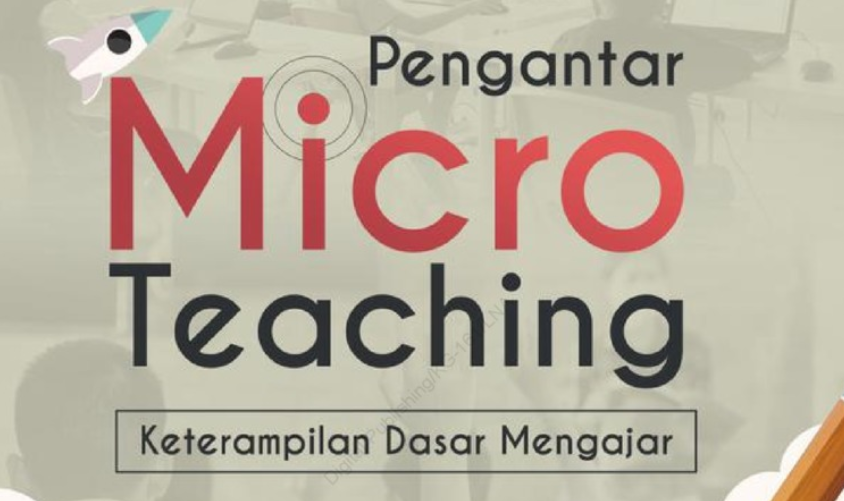
Teaching Skills and Microlearning
Understanding and Steps Regarding Observation and Micro-Learning, Questioning Skills, Reinforcement Skills, Variation Skills, Explaining Skills, Opening and Closing Skills, Small Group Discussion Guiding Skills, Class



Pendidikan Agama Islam
Providing provisions for the formation of students‘ complete personality (kaffah) by making Islamic teachings the basis for thinking, acting and behaving in their scientific and

Copyright © 2026 Sinau Digital UNESA All Rights Reserved